Deck and Fence Staining in Utah: Cost, Products, and Best Timing
Deck and fence staining in Utah: cost breakdown, best products for Utah’s climate, timing guide, and prep process from a professional painting contractor.
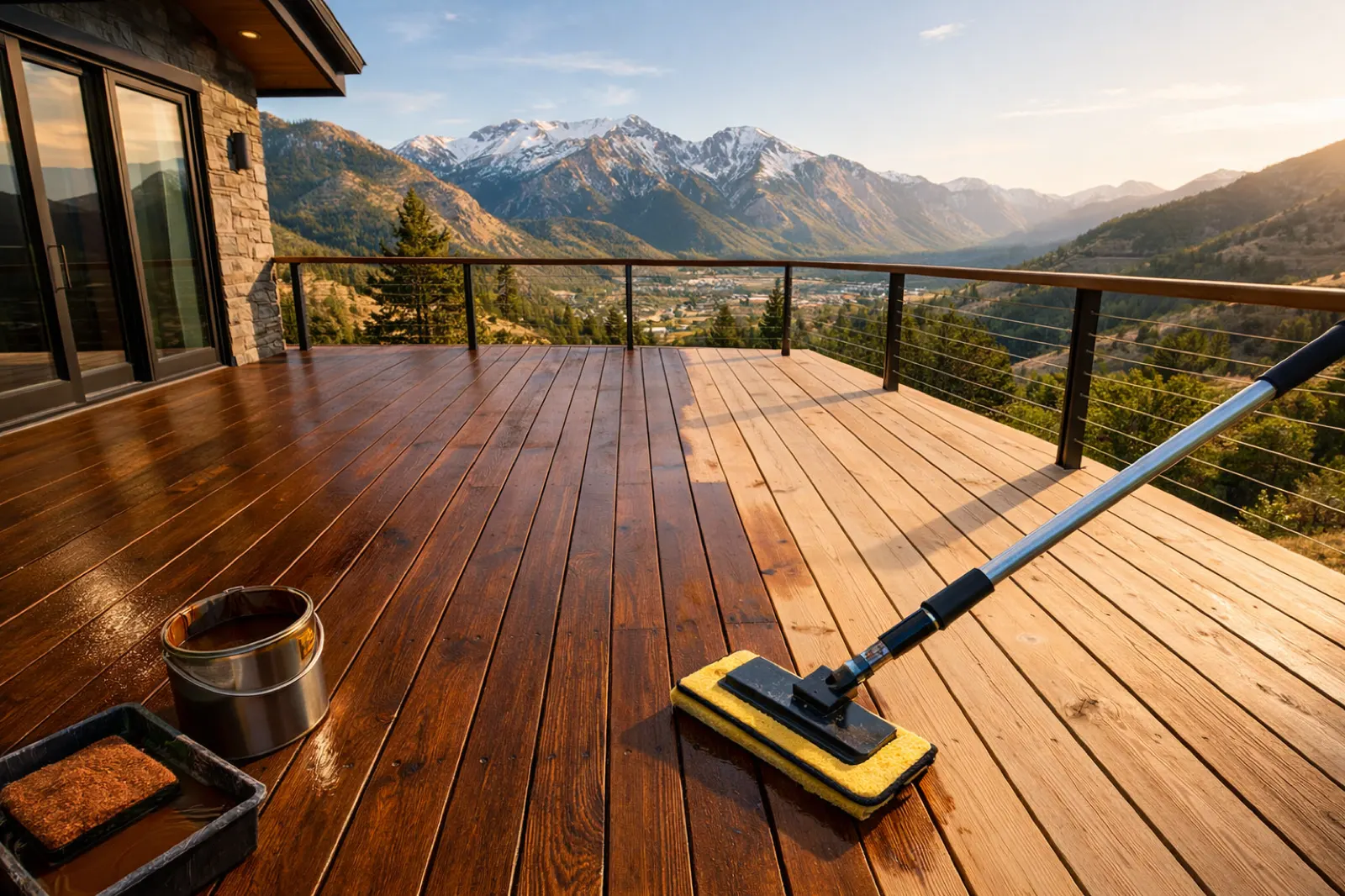
Utah is hard on outdoor wood. The combination of intense UV, low humidity, and wide temperature swings means decks and fences break down faster here than in more moderate climates. The wood itself tends to last, but the finish fades and fails quickly if you do not use the right products and prep correctly.
If you are looking at your deck or fence this spring and noticing graying, peeling, or bare spots, here is everything you need to know about staining in Utah.
How Much Does Deck Staining Cost in Utah?
Professional deck staining in Utah typically runs $4 to $8 per square foot, depending on the condition of the existing surface, the size of the deck, and whether the old coating needs to be stripped.
For a standard 300-square-foot deck, you are looking at $1,200 to $2,400 for professional staining. Larger decks, multi-level decks, or decks that need significant prep work (stripping old finish, replacing boards, sanding) will be on the higher end.
The biggest cost variable is prep. A deck that has been regularly maintained and just needs a cleaning and fresh coat is a very different project than a deck with three layers of failing stain that needs to be chemically stripped. The prep drives the price more than the stain itself.
How Much Does Fence Staining Cost in Utah?
Fence staining typically costs $1.50 to $4 per linear foot for a standard 6-foot privacy fence. A 200-linear-foot fence would run roughly $300 to $800 for staining.
Fences are generally faster than decks because they are vertical surfaces (they dry quicker and collect less debris), but the total cost depends on the fence height, condition, and accessibility. If the fence backs up to a hillside, a retaining wall, or a neighbor's yard with limited access, that adds time and cost.
Best Stain Products for Utah's Climate
Product selection matters more in Utah than in most states. The UV exposure at our altitude breaks down finish films faster, and the thermal cycling (hot days, cold nights) causes wood to expand and contract constantly. That movement cracks rigid film-forming finishes.
We prefer oil-based stains with UV-blocking pigments for most deck and fence work. Our go-to products are:
- Messmer's UV Plus for Decks and Siding (oil-based). This is a penetrating stain that absorbs into the wood rather than sitting on top of it. Because the stain lives in the wood, it handles the UV and thermal movement much better than film-forming products. It also wears by fading evenly rather than peeling, which means maintenance is simpler.
- Sherwin-Williams SuperDeck (water-based). We use this when the existing coating is water-based and we need to stay compatible. It performs well and is easier to clean up, but we generally prefer oil-based products for new or stripped wood in Utah.
The key principle: the more the stain lives in the wood rather than on top of it, the better it handles Utah's conditions. Film-forming finishes (like solid stains or deck paints) can look great initially, but they tend to peel within two to four years on horizontal surfaces that get direct sun.
When Is the Best Time to Stain a Deck or Fence in Utah?
The ideal window for deck and fence staining in Utah is late April through early June and September through mid-October. You want consistent temperatures between 50 and 85 degrees, no rain in the forecast for at least 48 hours after application, and low wind.
Summer months (July and August) can work, but the heat causes the stain to dry too fast, which can lead to lap marks and uneven absorption. If you stain in peak summer, you need to work in the shade and in sections small enough to maintain a wet edge.
Spring is popular because homeowners want their outdoor spaces ready for summer. But the window is tight. Utah springs are unpredictable, with surprise rain showers that can wash out fresh stain. We check the forecast carefully and build buffer days into our schedule for this exact reason.
Avoid staining in late fall or winter. Once overnight temperatures drop below 35 to 40 degrees consistently, the stain will not cure properly and you risk a finish that never fully hardens.
For more on how Utah's seasons affect exterior painting and staining, check our exterior services page and deck and porch painting and fence painting service details.
Stain vs. Paint for Outdoor Wood: Pros and Cons
This is one of the most common questions we get. Here is the short version:
Stain penetrates the wood and lets the grain show through (with semi-transparent and transparent options). It wears gradually by fading, which means maintenance is straightforward: clean, sometimes lightly sand, and recoat. Stain does not peel. In Utah's climate, this is a major advantage.
Paint sits on top of the wood and creates a solid, opaque film. It looks cleaner and more uniform initially, but on horizontal surfaces like decks, it will eventually crack and peel. Once paint starts peeling on a deck, the prep for the next coat is extensive and expensive: scraping, sanding, priming, and repainting.
For decks, we almost always recommend stain. For fences, it depends on the look you want. Stain is more natural and lower-maintenance. Paint gives you more color options and a more finished look, but it commits you to a heavier maintenance cycle.
Our Staining Process
Here is what a professional deck staining project looks like with us:
- Consultation. We check for soft spots in the wood, evaluate the existing coating type, and look for rotten boards. If the wood needs repair or replacement, we address that first.
- Cleaning and brightening. We clean the wood using specialized cleaning and brightening products. This removes dirt, mildew, UV-degraded finish, and gray wood fibers. It also opens the pores of the wood so the stain can penetrate properly.
- Drying. We let the wood dry completely, usually 24 to 48 hours, before staining. Staining over damp wood is the single most common mistake homeowners make, and it leads to finish failure.
- Staining. We spray the stain and backbrush to work it into the grain. Backbrushing is critical. Just spraying leaves the stain sitting on top of the wood. Backbrushing pushes it into the pores for better penetration and a more even appearance.
Fences follow a similar process, but vertical surfaces dry faster than horizontal ones, so we can generally move a little quicker on fence projects.
DIY Deck Staining vs. Hiring a Pro
Deck staining is one of the more approachable DIY projects if you are comfortable with the prep. But the prep is where most homeowners go wrong. The three most common mistakes are:
- Staining over dirty or wet wood without letting it dry.
- Not stripping off the failing coating before applying new stain.
- Using the wrong product for the surface (putting water-based over oil-based, or using a product that is not rated for your wood type).
If you have a small, simple deck in decent condition and you are willing to invest in proper cleaning products and let the wood dry completely, DIY can work. But for larger decks, multi-level structures, or decks with failing finishes that need stripping, the prep alone is a full weekend of work. A professional crew can usually complete the full project in two to three days.
Get Your Deck or Fence Ready for Summer
If your deck or fence is looking tired after the winter, spring is the right time to address it. We offer free estimates for deck and fence staining projects across Weber, Davis, and Salt Lake Counties. Call us at (801) 512-2916 to get on the spring schedule before it fills up.