Ceiling Painting in Utah: Cost, Tips, and When It Is Worth It
How much does ceiling painting cost in Utah? Learn when it is worth it, which finish to use, and common mistakes to avoid. Tips from a professional Utah painter.
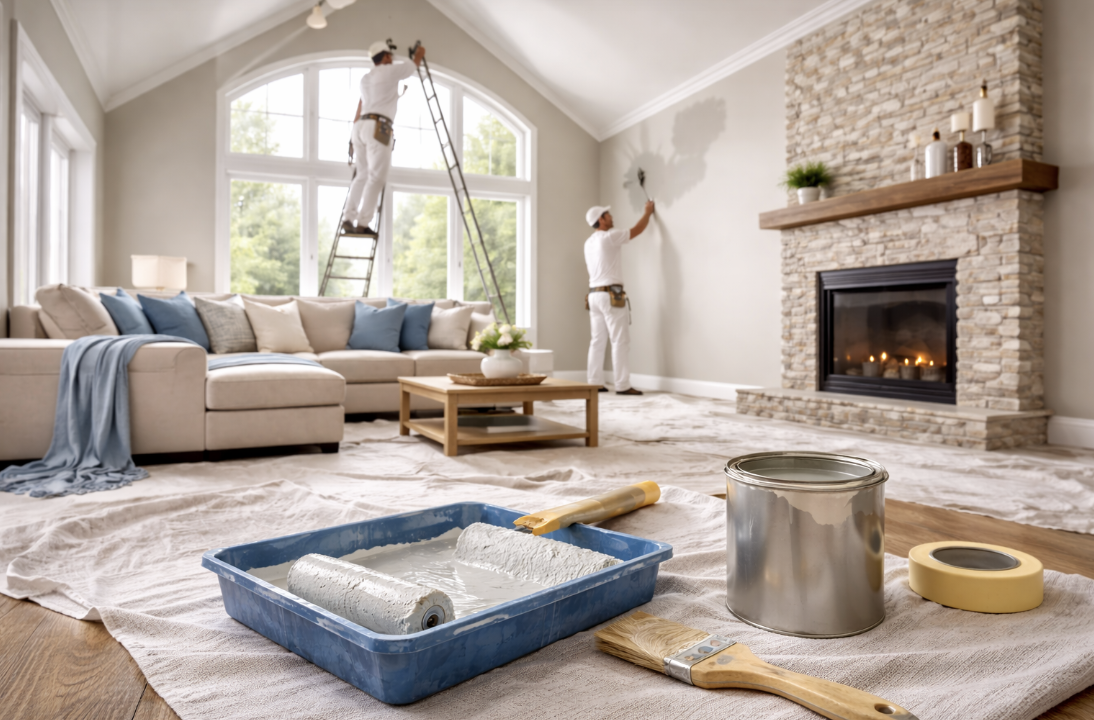
Ceilings are the most overlooked surface in any room. Homeowners will repaint their walls three times before they even look up.
But a dingy, yellowed, or stained ceiling can drag down an entire paint job, and painting it at the right time can completely change how a room feels.
We discuss ceilings on every single interior estimate we do. About 40% of our interior projects end up including ceiling work. Here is what Utah homeowners should know about ceiling painting costs, product selection, and when it is worth adding to your scope.
How Much Does It Cost to Paint a Ceiling in Utah?
For a standard 8- to 10-foot flat ceiling in a typical Utah room, you are usually looking at roughly $150 to $400 per ceiling when it is part of a larger interior painting project.
If you are calling a painter to do one ceiling only, expect higher pricing because of minimum project charges.
Cost increases are typically driven by:
- Height: Vaulted and high ceilings need additional equipment and setup time.
- Texture: Knockdown and orange-peel ceilings require more paint and slower application.
- Stains: Water or smoke staining often requires stain-blocking primer before topcoat.
If your walls are already being painted, adding ceilings is usually most cost-effective because the crew is already onsite and masking is already in place.
When Is Ceiling Painting Actually Worth It?
Not every ceiling needs paint. If yours is clean, white, and in good condition, you can often skip it. Ceiling painting is absolutely worth it when:
- There are water stains or discoloration: The stain will usually show through without primer and repainting.
- The ceiling has yellowed from age or smoke: This is common in kitchens and older homes.
- You are changing wall colors: Fresh ceiling paint helps the room look cohesive.
- The existing sheen is wrong: Many homeowners want flat ceilings but inherit eggshell or satin from prior work.
Flat, Matte, or Eggshell: Which Finish for Ceilings?
We use Sherwin-Williams Ceiling Paint in Extra White with a flat finish on most projects.
Why flat is standard:
- It hides imperfections: Flat absorbs light and minimizes visible texture flaws and patching.
- It avoids visual glare: Shiny ceilings can make rooms feel lower and more closed-in.
- It looks consistent: Most Utah interiors are designed around soft, non-reflective ceilings.
The primary exception is high-moisture bathrooms, where matte or eggshell may be more practical for washability and moisture resistance.
Vaulted and High Ceilings: What Changes
Ceilings above 10 feet are a different scope. Pricing increases because setup and safety requirements increase. Extension poles, taller ladders, and sometimes scaffolding are required for professional results.
Cut lines also get harder as ceiling angles change. This is one of the biggest reasons vaulted ceilings are difficult for DIY projects even when the homeowner is otherwise capable.
For related guidance on tall surfaces, see how to paint high-ceiling rooms without streaks.
Common Ceiling Painting Mistakes (and How to Avoid Them)
- Wavy cut lines: Ceiling-to-wall transitions require consistent brush pressure and controlled loading.
- Wrong roller nap: Textured ceilings usually need 1/2-inch to 3/4-inch nap for even coverage.
- Cutting too early: If perimeter cuts dry before rolling, hat-banding becomes visible.
- Skipping primer on stains: Water and smoke stains bleed through standard ceiling paint.
For deeper prep-related pitfalls, review common interior painting mistakes in Utah.
Should You DIY or Hire a Pro for Ceiling Work?
Ceiling painting is physically demanding and less forgiving than wall painting. Working overhead, keeping a wet edge, and maintaining straight transitions all increase the chance of visible defects.
A small, standard-height ceiling in good condition can be a reasonable DIY project. Vaulted spaces, stain issues, textured ceilings, and multi-room projects are usually better handled by a professional crew.
For most homeowners, the best value is adding ceilings to an existing interior repaint so the whole room feels finished and consistent.
FAQ: Ceiling Painting in Utah
Get a Free Ceiling Painting Estimate
If you are planning an interior project and unsure whether to include your ceilings, we can help you decide during your estimate.
We will evaluate condition, height, texture, and existing finish, then give you a clear recommendation. Call (801) 512-2916 to schedule a free estimate.