Accent Walls in Utah Homes: When They Work and When They Don’t
Accent walls can transform a Utah home, but only when color, lighting, room layout, and prep are handled correctly. Learn when accent walls work and when they hurt the space.
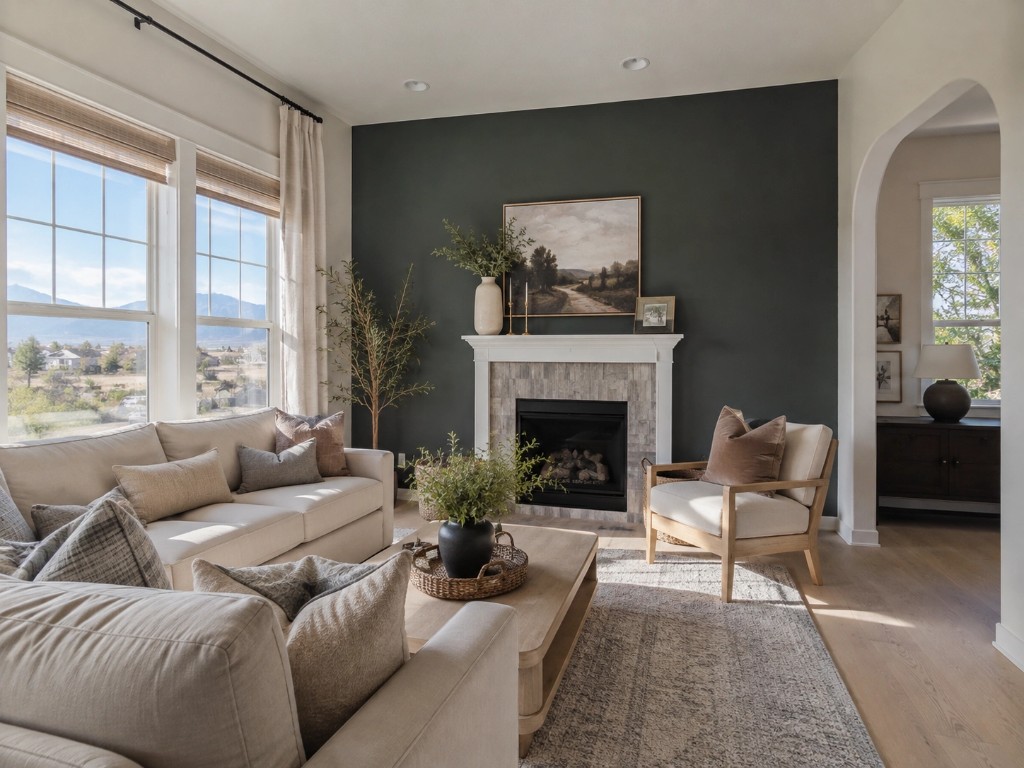
Accent walls can be a great design choice in Utah homes.
They can add depth, create a focal point, highlight architecture, and bring personality into a room without repainting the entire space. But when they are done poorly, accent walls can also make a room feel smaller, dated, unbalanced, or disconnected from the rest of the home.
The difference usually comes down to the wall you choose, the color you select, the lighting in the room, and the quality of the prep work before paint is applied.
In Utah homes, accent walls require extra thought because many interiors have large windows, open-concept layouts, vaulted ceilings, white trim, light flooring, and strong natural light. A bold color that looks great on a sample card may feel completely different once it covers a full wall in a bright Utah living room.
At Elevate Paint Pros, we help homeowners make accent walls look intentional, clean, and professionally finished. That means choosing the right wall, the right finish, the right color, and preparing the surface properly before painting begins.
Homeowners planning professional interior painting services in Utah should understand when accent walls work and when they do not.
What Is an Accent Wall?
An accent wall is one wall in a room painted a different color than the surrounding walls.
The goal is usually to create contrast, define a space, or draw attention to a specific area.
Accent walls are commonly used in:
- Living rooms
- Bedrooms
- Home offices
- Dining rooms
- Entryways
- Kids' rooms
- Basements
- Media rooms
- Stairways
A good accent wall should feel like it belongs in the room. It should support the layout, furniture, lighting, and overall design.
A bad accent wall usually feels random. It may look like one wall was painted differently without a clear reason.
When Accent Walls Work Best
Accent walls work best when they highlight something that already matters in the room.
The best accent walls usually support a natural focal point.
Examples include:
- The wall behind a bed
- A fireplace wall
- A built-in shelving wall
- A dining room feature wall
- A media wall
- A home office backdrop
- A stairway wall
- A wall with architectural detail
When the room already has a clear focal point, the accent color helps emphasize it.
For example, a dark green or navy wall behind a bed can make a bedroom feel grounded and finished. A warm neutral accent around a fireplace can make a living room feel more intentional. A muted blue-gray office wall can create a clean background for work without overwhelming the room.
Accent walls are strongest when they have a purpose.
When Accent Walls Do Not Work
Accent walls usually fail when the selected wall does not make sense visually.
Common mistakes include:
- Choosing a random side wall
- Painting a wall with no focal point
- Using a color that does not match the rest of the home
- Choosing a wall broken up by too many doors or windows
- Using a color that is too dark for the room
- Ignoring natural light
- Painting over poor wall texture
- Using the wrong sheen
- Choosing a trendy color without considering the home
A random accent wall can make the room feel unfinished. Instead of looking designed, it can look like the homeowner stopped halfway through a repaint.
This is especially noticeable in open-concept Utah homes where the living room, kitchen, dining room, and entryway may all connect visually.
Utah Natural Light Changes Everything
Utah homes often have strong natural light.
That light can make accent walls look very different throughout the day.
A color may appear:
- Rich in the morning
- Washed out at noon
- Too dark in the evening
- More blue in north-facing rooms
- More yellow in west-facing rooms
- Too reflective if the sheen is wrong
This matters because accent walls are meant to stand out. If the color changes poorly in natural light, the entire room can feel off.
Homes in Draper, Layton, Ogden, South Jordan, Herriman, Bluffdale, and newer Utah communities often have large windows and bright main living spaces. That can make bold accent colors more intense than expected.
Before painting an accent wall, it is smart to test color samples at different times of day.
For homeowners who are unsure which color direction works best, interior color consultation services can help narrow the options before paint goes on the wall.
Accent Walls in Living Rooms
Living rooms are one of the most common places for accent walls.
They can work well when the wall supports the room's main focal point.
Good living room accent wall locations include:
- Fireplace walls
- TV walls
- Built-in shelving walls
- Large uninterrupted walls
- Walls behind a sectional
- Tall vaulted feature walls
Accent walls in living rooms should be chosen carefully because the room is usually connected to other spaces.
In Utah homes with open layouts, the accent wall color should work with:
- Kitchen cabinets
- Flooring
- Countertops
- Trim
- Furniture
- Stair railings
- Natural light
- Existing wall color
If the main gathering space needs a full update, living room painting in Utah may be a better option than painting one wall only.
This living room painting guide for Utah homes also explains how lighting, sheen, and prep affect high-visibility spaces.
Accent Walls in Bedrooms
Bedrooms are often the safest rooms for accent walls.
The best location is usually the wall behind the bed.
This works because the bed already creates a focal point. Painting that wall a deeper or softer color can make the room feel more finished without overwhelming the space.
Good bedroom accent colors include:
- Soft green
- Navy blue
- Warm charcoal
- Muted beige
- Dusty blue
- Clay
- Taupe
- Deep olive
- Warm brown
The goal should usually be calm, not chaos.
A highly saturated color may look exciting at first but feel overwhelming over time. Most bedrooms benefit from colors that feel restful, grounded, and easy to live with.
Accent Walls in Home Offices
Accent walls can work very well in home offices.
A strong office accent wall can create:
- A clean video call background
- A more focused work environment
- A creative design element
- Separation from the rest of the home
Good office accent colors include:
- Blue-gray
- Sage green
- Charcoal
- Deep navy
- Warm taupe
- Muted clay
- Soft black
- Forest green
For Utah homes with bright office windows, avoid colors that become too harsh in direct light. A muted tone usually performs better than an overly saturated one.
Accent Walls in Entryways and Stairways
Entryways and stairways can be tricky.
A tall stairway wall or entry feature wall can look beautiful when painted correctly, but these spaces often require careful planning.
Challenges include:
- Tall walls
- Difficult access
- Strong shadows
- Multiple trim transitions
- Open sightlines
- Natural light changes
- Visible roller marks if poorly applied
In these spaces, prep and application technique are critical.
A poorly painted stairway accent wall can be very noticeable because people see it from multiple angles.
Why Wall Prep Matters More on Accent Walls
Accent walls draw attention.
That means imperfections become more visible.
Before painting an accent wall, the surface should be inspected for:
- Nail holes
- Dents
- Drywall cracks
- Texture mismatches
- Old patchwork
- Sanding marks
- Caulk gaps
- Uneven previous paint
- Stains
- Surface roughness
If the wall is not prepared correctly, the accent color may highlight every flaw.
This is especially true with darker colors. Dark accent walls can reveal poor texture, bad patchwork, flashing, and roller lines much more than lighter walls.
For homes with wall damage, drywall repair and prep services can help create a cleaner surface before painting.
Homeowners can also learn more from this guide on drywall repair and paint prep in Utah homes.
Choosing the Right Sheen for an Accent Wall
Paint sheen affects how an accent wall looks.
In most cases, accent walls should not be too shiny.
Higher sheen can reflect Utah sunlight and reveal imperfections. Lower sheen can create a softer, more elegant appearance, but it may not be as washable in high-traffic areas.
Common options include:
Matte
Matte works well for dramatic accent walls because it reduces glare and creates a softer finish.
Eggshell
Eggshell is a balanced choice for many living rooms and bedrooms. It provides slight durability without too much shine.
Satin
Satin may work in higher-traffic areas, but it can reveal more wall flaws under strong light.
Semi-Gloss
Semi-gloss is usually not recommended for accent walls unless it is a specific design feature, paneling, trim, or built-in detail.
The right finish depends on the room, wall condition, color, and lighting.
Accent Walls and Open-Concept Utah Homes
Open-concept homes need extra caution.
In a closed bedroom, an accent wall can stand alone. In an open-concept main floor, one accent wall may be visible from the kitchen, dining room, entryway, stairwell, and living room.
That means the color needs to work with everything around it.
A bold accent wall can feel disconnected if it clashes with:
- Cabinet colors
- Flooring undertones
- Countertops
- Backsplash
- Trim
- Furniture
- Metal finishes
- Other wall colors
In open Utah homes, softer accent colors often work better than extremely bold colors.
A muted green, warm taupe, soft charcoal, or dusty blue may feel more natural than a bright red, intense teal, or overly dark black.
Accent Walls vs. Full Room Painting
Sometimes an accent wall is the right choice.
Other times, painting the whole room creates a better result.
An accent wall may work if:
- The room has a clear focal point
- The rest of the wall color is still in good shape
- The color adds balance
- The room needs subtle contrast
- You want a smaller design update
Full room painting may be better if:
- The current paint is worn or faded
- The walls are scuffed throughout
- The existing color feels dated
- The room lacks cohesion
- The accent wall would look random
- The trim also needs attention
A professional painter can help you decide whether an accent wall is enough or whether the whole room needs a refresh.
Accent Walls and Trim
Trim color plays a major role in how an accent wall looks.
White trim can make bold colors look sharper. Warm trim may soften darker colors. Worn or chipped trim can make the accent wall look unfinished.
If your baseboards, door casing, or window trim are already scuffed, painting an accent wall may make those flaws more obvious.
For homes with worn trim, trim and baseboard painting services can help the finished room look cleaner and more complete.
Case Study: A Utah Living Room Accent Wall That Worked
A Utah homeowner wanted to add contrast to a bright living room with white trim, light flooring, and large windows. They originally considered a very dark black accent wall behind the sofa.
After reviewing the natural light and surrounding finishes, a softer charcoal-green was a better fit. It still created depth, but it did not feel too harsh against the flooring and trim.
Before painting, the wall needed several nail holes filled, two small dents repaired, and a previous patch sanded and primed. Without that prep, the darker color would have made the flaws stand out.
The finished accent wall gave the room a more designed look without overpowering the space.
The reason it worked was simple: the wall had a purpose, the color fit the home, and the surface was properly prepared.
Case Study: An Accent Wall That Did Not Work
Another homeowner had a small open dining area connected to the kitchen and living room. They painted one short side wall a bold red because they wanted the room to feel more energetic.
The problem was that the wall had no natural focal point. It was interrupted by a doorway, did not align with the furniture, and clashed with the cabinet undertones.
Instead of feeling intentional, the accent wall made the room feel smaller and disconnected.
A better solution would have been a softer neutral throughout the dining area or a more subtle accent color on a wall that actually supported the room layout.
Accent walls should guide the eye, not confuse it.
Why Elevate Paint Pros Handles Accent Walls Differently
At Elevate Paint Pros, accent walls are not treated as quick one-wall projects.
We look at:
- Room layout
- Natural light
- Existing wall color
- Flooring undertones
- Trim color
- Furniture placement
- Surface condition
- Wall texture
- Paint sheen
- Long-term style
Then we prep the wall properly before applying paint.
That means:
- Filling holes
- Repairing dents
- Sanding rough areas
- Spot priming repairs
- Creating clean cut lines
- Protecting flooring and furniture
- Applying even coverage
An accent wall should look sharp, intentional, and professionally finished.
Accent Walls Should Feel Intentional
Accent walls can absolutely work in Utah homes.
They can add depth, warmth, personality, and design value when they are chosen carefully. But they need to make sense with the room layout, natural light, color palette, wall condition, and finish.
The best accent walls do not look random. They look like part of the home's design.
If you want an accent wall that feels clean, modern, balanced, and professionally finished, Elevate Paint Pros can help with color selection, prep, and expert application.
Call Elevate Paint Pros: (801) 512-2916
Schedule Your Free Estimate: https://www.elevatepaintpros.com/services